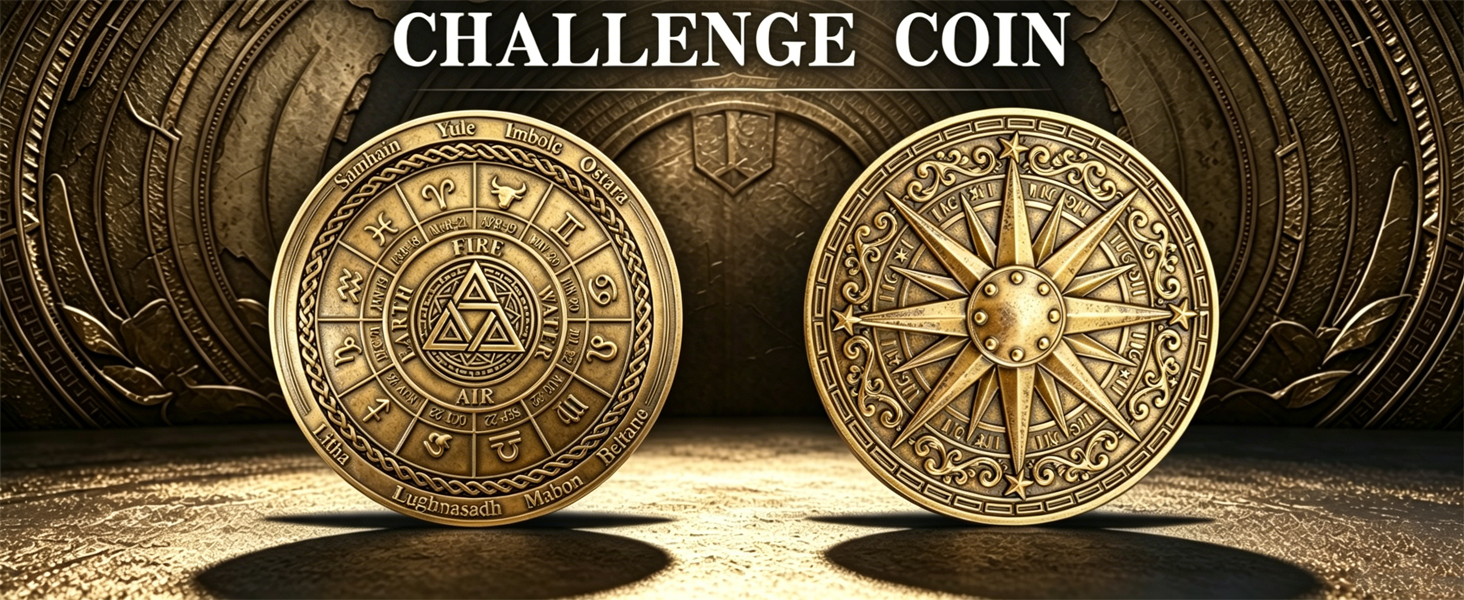
The Enduring Allure of Collectible Coins, Challenge Coins, and Sobriety Coins
Few objects carry as much personal weight in as little space as a coin. It fits in a palm, slips into a pocket, and survives decades of handling — yet the stories it holds can span generations. Whether you are chasing a rare date in a dealer’s case, receiving a unit crest from a colleague overseas, or accepting a milestone medallion at a recovery meeting, coins have a way of turning abstract values into something you can actually hold.
This guide explores three overlapping worlds: collectible coins as an investment and hobby, challenge coins as a language of belonging, and sobriety coins as a quiet daily reminder of resilience. Each one rewards attention in a different way — and each one can become the seed of a lifelong collection.
Collectible Coins: Patience Pays in Millimetres
Condition is everything. Two coins struck from the same die in the same year can differ in value by a factor of ten simply because one spent forty years in a canvas bag and the other sat untouched in a cardboard flip. Numismatists describe condition on a scale from About Good to Mint State, and learning to read that scale honestly is the single fastest way to stop overpaying.
Beginners often assume the oldest coins are the most valuable. In practice, supply and demand tell a more interesting story than age alone. A copper penny from a hundred years ago may be worth face value because millions survived, while a modern commemorative with a tiny mintage can appreciate quickly. Below are a few practical entry points:
- Start with a theme, not a country. Shipwreck silver, wheat cents, or coins featuring animals will keep you focused and prevent scattered spending.
- Buy the reference book first. A reputable guide costs less than one mid-grade coin and pays for itself immediately.
- Photograph every purchase. Good lighting and a record of the price paid make later appraisal far easier.
Once you understand grading, you begin to notice how much of the market runs on trust — which makes buying from a specialist who documents provenance and grade especially valuable. Serious hobbyists often browse well curated coin collections to compare listings, confirm mintage figures, and learn how professional sellers describe flaws.
Challenge Coins: A Handshake You Can Keep
The tradition is younger than most people think. Military challenge coins are widely said to have started with a squadron commander who presented a medallion to a pilot; when the pilot was downed behind enemy lines, the coin saved him from being mistaken for a spy. Whether or not every detail is accurate, the ritual that grew from it is real: the coin is presented rather than sold, and it is meant to be carried.
Today, police departments, fire crews, engineering teams, and even corporate project groups commission their own. A good challenge coin is chunky, tactile, and legible at arm’s length — because the point is recognition across a room. Designers obsess over enamel depth, edge reeding, and three-dimensional relief, and the best pieces feel like heirlooms the moment they land in your hand.
A challenge coin is never really about the metal. It is a compressed certificate of “you were there, and we remember.”
Collectors of these pieces often organise by unit, era, or region. Because so few are ever publicly listed, trading networks matter more than retail catalogues — and swapping doubles with a fellow collector is half the pleasure.
Sobriety Coins: Turning Days Into Something Solid
Recovery is counted one day at a time. That is exactly why the sobriety coin exists. Bronze for thirty days, silver for one year, and a range of colours and engravings marking longer milestones — the medallion becomes a physical counterweight to an otherwise invisible achievement. Many people keep one in a wallet, a jacket pocket, or a bedside drawer, using it as a thirty-second pause before a decision.
What surprises first-time buyers is the variety. Some medallions carry the Serenity Prayer; others use deliberately nondenominational wording so they work for anyone. Some are engraved with a personal sobriety date, making them custom keepsakes rather than mass-produced tokens. Families and sponsors often purchase a set at once, so that a milestone can be celebrated the moment it arrives.
Presentation matters more than price. A coin handed over with a few honest words at a meeting does more good than an expensive medallion left in a box. If you are choosing one for someone else, look for clear, deep engraving, a satisfying weight, and a protective capsule so it survives a decade of handling.
Building a Collection With Meaning
The three categories intersect more than they appear to. A former service member may keep a challenge coin and a one-year sobriety token in the same display case; a numismatist may find that the commemorative medallion from a family reunion is the piece everyone asks about. A simple approach:
- Group by story, not by size or metal — visitors respond to narrative, not inventory.
- Label everything. A date, a name, and one line of context turn a curiosity into an heirloom.
- Handle with intention. Cotton gloves for high-grade numismatic pieces; bare hands, respectfully, for tokens meant to be carried.
- Store dry and dark. Humidity and sunlight do more damage than handling ever will.
The Takeaway
Coins are small, quiet objects that happen to hold an enormous amount of human meaning. A collectible rewards patience and curiosity. A challenge coin rewards service and fellowship. A sobriety coin rewards courage, one day at a time. Start with one piece that genuinely matters to you — then let the collection grow the way all good collections do: slowly, and for reasons that are entirely your own.